
Download library
Greenhouse Permit Checklist Template: 7 Essential Steps to Secure Yours Fast and Stress-Free
Streamline your greenhouse permit application with our comprehensive checklist template. Get step-by-step guidance for building permits, zoning requirements, and approval processes.
Greenhouse projects typically move through two regulatory phases: construction approval (zoning, building, site work) and operational compliance (worker safety, water discharge, pesticide use). This template keeps both phases on one page so you can gather documents once, track review status, and avoid rewriting answers when agencies ask follow-up questions.
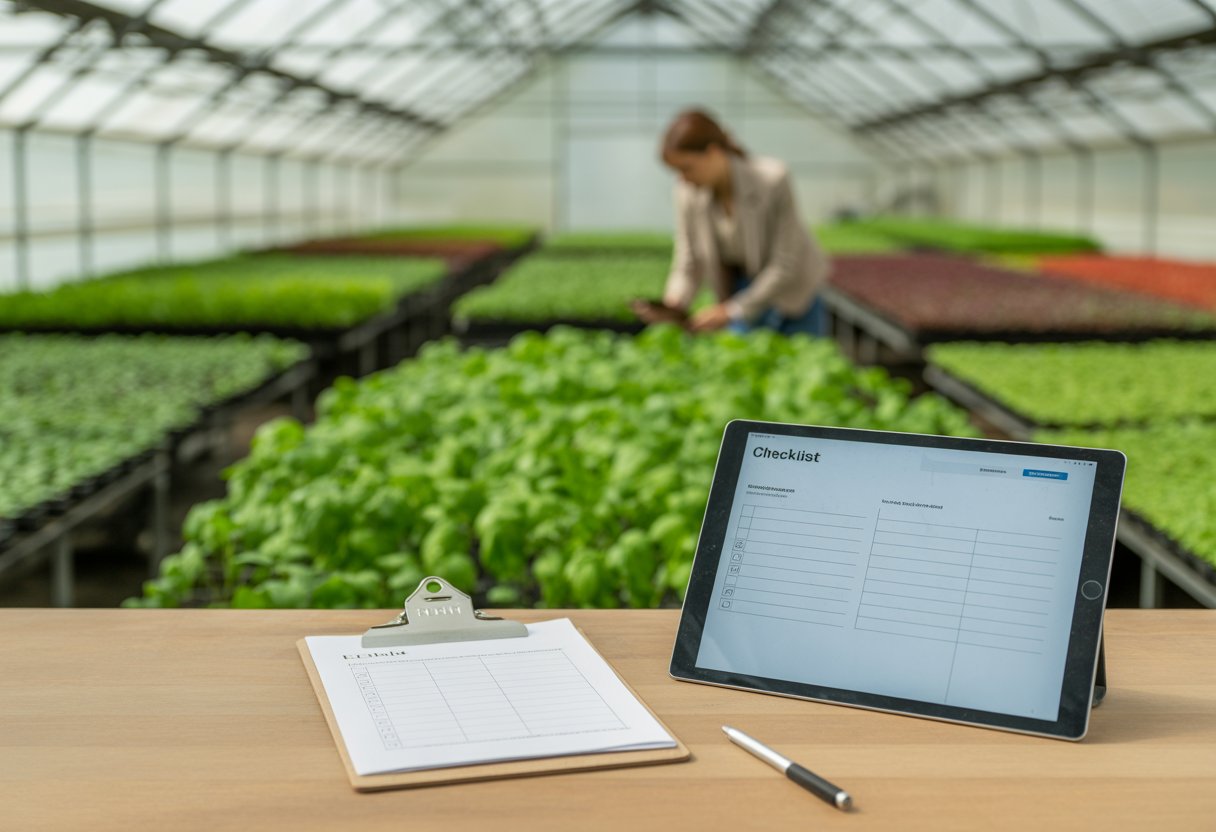
Phase 1 – Pre-construction checklist
1. Confirm land-use eligibility
- Identify the property zoning classification and verify that agricultural or greenhouse uses are allowed.
- Document setback, height, and lot-coverage limits for accessory structures.
- Capture contact information for the planning or zoning official who provides written confirmation.
2. Building permit triggers
- The International Residential Code exempts detached accessory structures under 200 square feet from permit requirements, but anything larger—or any structure with electrical or plumbing—requires a building permit in most jurisdictions.[^1]
- Compile architectural drawings, foundation details, structural calculations, and utility plans as needed.
- If you are using a manufactured or prefabricated greenhouse, include the manufacturer’s engineering certifications.
3. Site plan package
| Document | Purpose | | ----------------------------------------- | -------------------------------------------------------------------------- | | Scaled site plan with property boundaries | Shows setbacks, access, and relationship to existing structures. | | Grading and drainage plan | Demonstrates how stormwater will be managed during and after construction. | | Utility layout | Identifies electrical service, water supply, and wastewater handling. |
4. Construction-phase environmental compliance
- If land disturbance is one acre or more, you must obtain coverage under the EPA (or delegated state) Construction Stormwater NPDES permit before breaking ground.[^2]
- Prepare an erosion and sediment control plan, inspection logs, and contractor certifications to satisfy permit conditions.
Phase 2 – Operational compliance checklist
5. Determine commercial vs. hobby status
- If you intend to sell products or hire non-family employees, treat the greenhouse as a commercial operation. That status triggers worker protection, tax, and reporting obligations regardless of structure size.
6. Worker Protection Standard (WPS)
- Agricultural employers with pesticide handlers or agricultural workers must provide decontamination supplies (water, soap, single-use towels) and training that meet EPA Worker Protection Standard requirements.[^3]
- Plan locations for decontamination stations, emergency eyewashes, and central posting of pesticide safety information.
7. Pesticide and water discharge permits
- Evaluate whether pesticide applications will occur in, over, or near surface water (irrigation ditches, drainage canals). If so, determine eligibility for your state’s NPDES Pesticide General Permit.[^4]
- Maintain pesticide application logs, calibration records, and spill-response procedures as part of your compliance file.
8. Operations documentation table
| Requirement | Records to maintain | | ------------------------ | -------------------------------------------------------------------------------------- | | WPS training & roster | Training certificates, training dates, trainer credentials. | | Decontamination supplies | Inspection logs, supply restock records, station locations. | | Pesticide use | Applicator licenses, product labels, application dates, weather conditions. | | Stormwater controls | Inspection checklists, maintenance logs, discharge monitoring reports (if applicable). |
Using the downloadable template
- Populate project metadata. Include parcel ID, project manager, and agency contacts.
- Track submission status. Each row in the PDF has fields for “Prepared,” “Submitted,” “Approved,” and “Notes” so you can log agency responses.
- Archive approvals. Store permits, letters, and inspection sign-offs with the checklist so the full compliance package is in one location for future expansions or audits.
References
[^1]: International Code Council. 2021 International Residential Code – R105.2 Work Exempt from Permit. https://codes.iccsafe.org/s/IRC2021P2/part-i-administrative/IRC2021P2-Pt01-Ch01-SecR105.2
[^2]: U.S. Environmental Protection Agency. Stormwater Discharges from Construction Activities. https://www.epa.gov/npdes/stormwater-discharges-construction-activities
[^3]: U.S. Environmental Protection Agency. Decontamination Supplies Under the Worker Protection Standard. https://www.epa.gov/pesticide-worker-safety/decontamination-supplies-under-worker-protection-standard
[^4]: U.S. Environmental Protection Agency. Pesticide Permitting (NPDES Pesticide General Permit). https://www.epa.gov/npdes/pesticide-permitting