
Sierra Greenhouse Insights
Hobby Greenhouse vs Commercial Greenhouse: 5 Key Differences Every Gardener Must Know Today
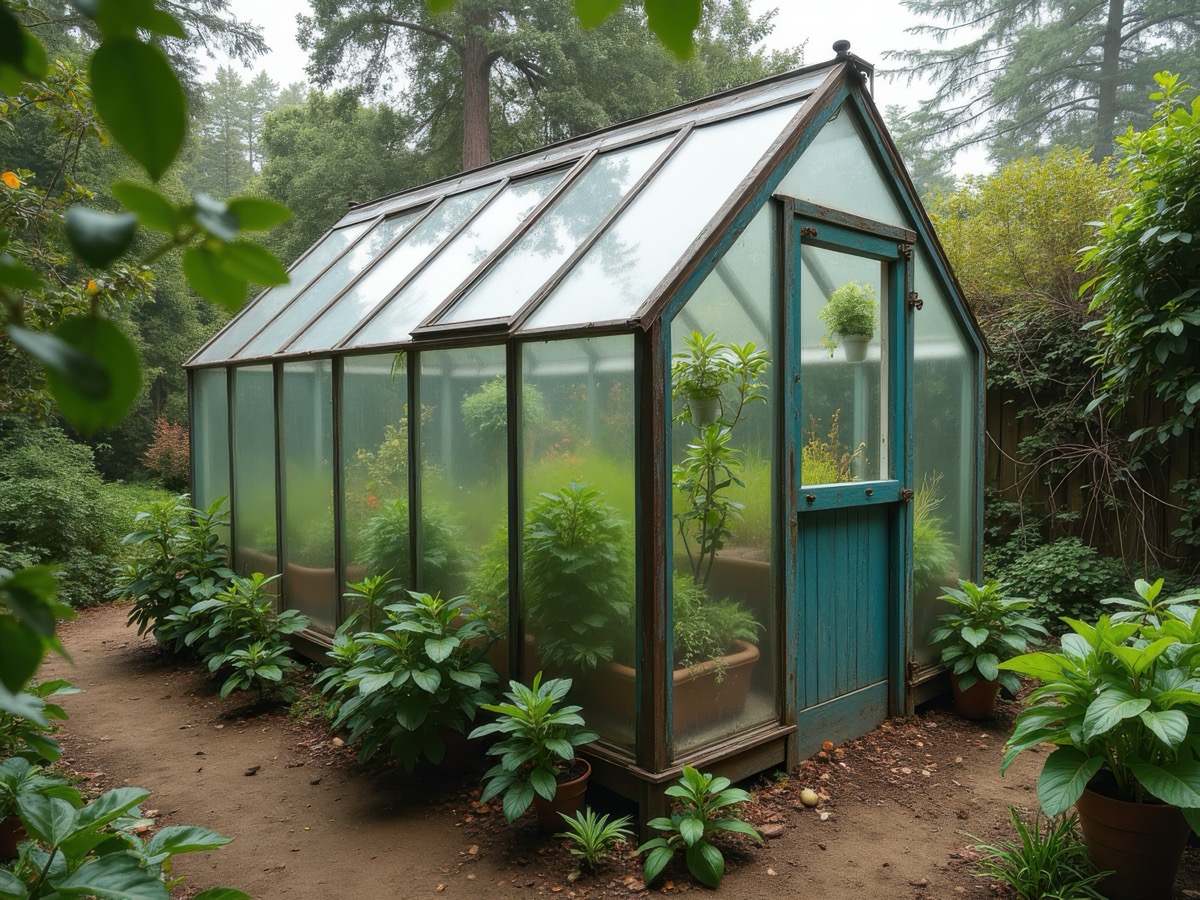
When you start thinking about greenhouses, it’s surprisingly easy to confuse hobby ones with commercial ones. The main difference? Hobby greenhouses are smaller, great for personal use, while commercial greenhouses are much bigger and built for business or large-scale plant sales. You might imagine a cozy backyard spot for hobbyists, and then picture a sprawling, high-tech space packed with crops for commercial growers.
What you want to do with your greenhouse really shapes your choice. If you just want to grow a few veggies or flowers for your family, a hobby greenhouse is probably all you need.
But if you’re thinking about serious production or selling, commercial greenhouses offer a lot more control and space. Of course, they also demand a bigger upfront investment and more effort to run.
I remember when I first got into gardening, I figured any greenhouse would work. Turns out, they all have their own personalities. If you know what matches your goals, you’ll save time, money, and headaches later.
So, what really sets these two types apart? Let’s dig in and see which one actually fits you.
Key Takeaways
- Hobby greenhouses are for personal use, commercial ones focus on large-scale growing.
- Size, design, and operation needs vary greatly between the two.
- Your planting goals should guide which greenhouse fits your needs.
Fundamental Differences Between Hobby and Commercial Greenhouses
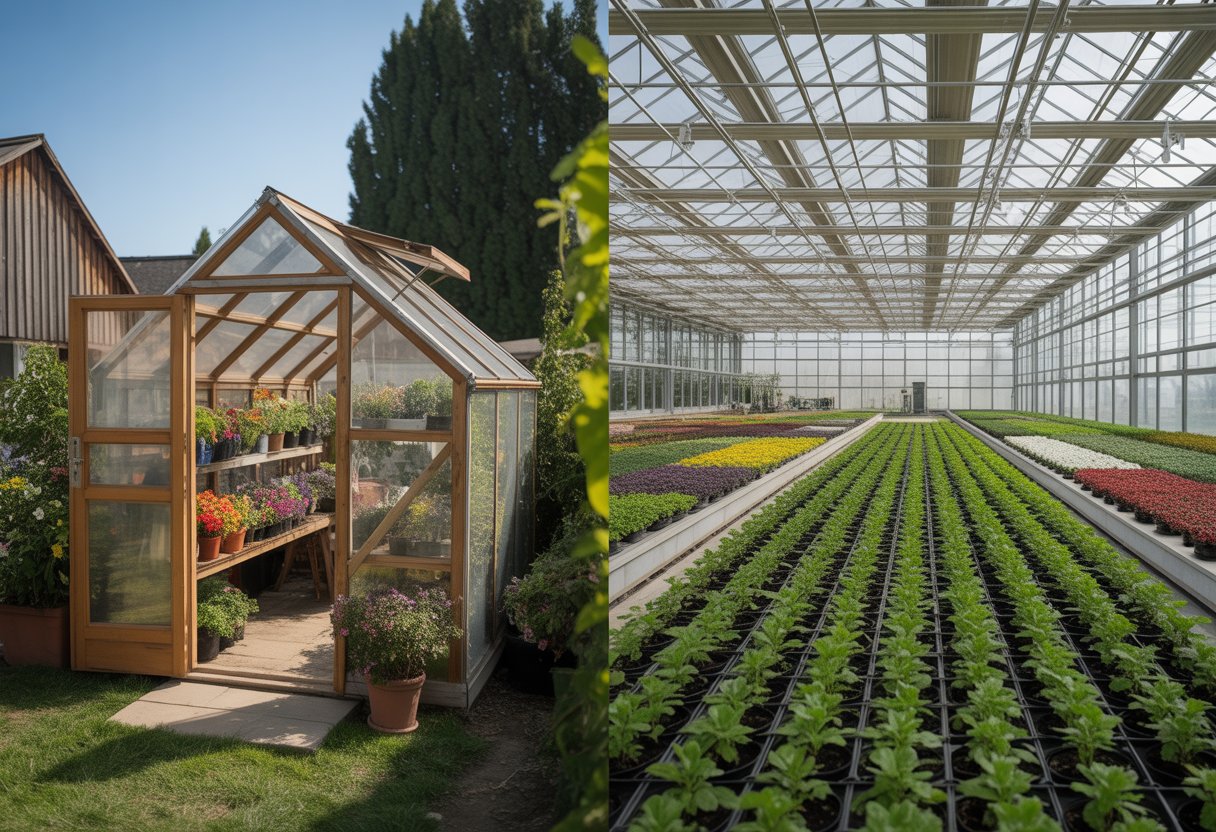
When you start comparing hobby greenhouses with commercial ones, you’ll spot big differences in size, purpose, and construction. These details affect what you spend, what you can grow, and how much time you’ll spend tending plants.
Defining Hobby Greenhouses
Hobby greenhouses usually stay on the smaller side, designed for home gardeners like you and me. They’re perfect for a handful of plants—maybe some veggies, flowers, or herbs for your family or friends.
You won’t see these taking up acres; they might fit neatly in your backyard or even on a patio. The cost tends to be more affordable upfront, though you might pay more per square foot since the space is smaller.
They’re simpler to set up and manage, with basic heating, ventilation, and shelving. You get a cozy spot to experiment and figure out what grows best where you live.
Defining Commercial Greenhouses
Commercial greenhouses? That’s a whole other world. These setups are big, industrial-sized, and built for growing massive amounts of crops, flowers, or seedlings for sale.
We’re talking hundreds or thousands of square feet, sometimes even acres. They use advanced climate control, watering, and lighting systems to keep everything just right—especially since people depend on these plants for income.
Upfront costs run high, but because they produce so much, the per-plant costs actually drop.
Primary Purposes and End Goals
A hobby greenhouse is all about personal enjoyment and maybe sharing a little with friends. You’re growing for pleasure, focusing on variety, learning, and fresh produce for your own table.
You don’t have to mass-produce, so the vibe is more about quality and experimentation.
Commercial greenhouses, on the other hand, chase efficiency, volume, and consistency. The goal? Maximize output and profit by selling to stores or wholesalers.
They tweak everything to keep costs low per plant and make the process as smooth as possible. The scale and investment really set these two types apart.
Size and Greenhouse Structure
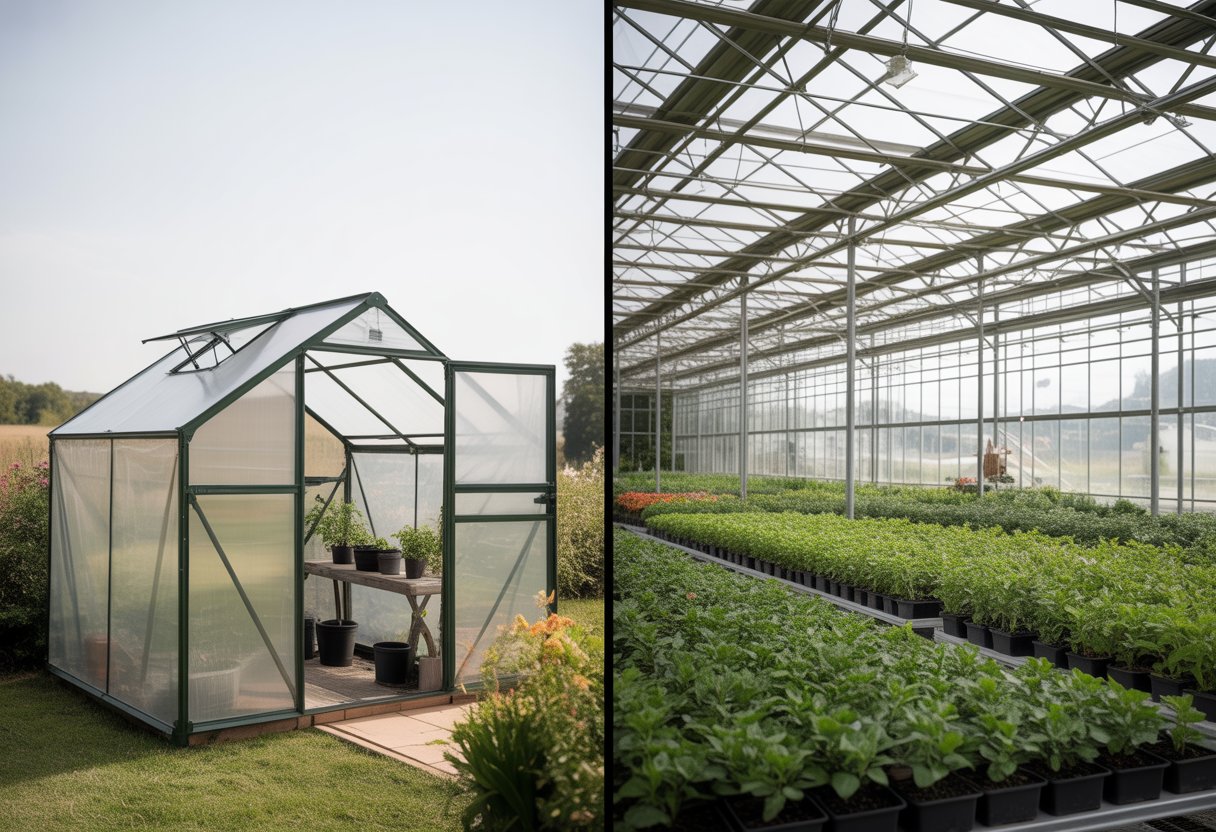
When you picture greenhouses, size and shape make a huge difference. Your available space, what you want to grow, and how much time you can spend gardening all play a role.
Structures can range from tiny hobby setups to massive commercial frames. Every option brings its own benefits and challenges.
Typical Dimensions and Scale
Hobby greenhouses usually start small. Picture a snug 6 by 4 feet spot for herbs or orchids. If you want to grow veggies, something like 10 by 20 feet fits most backyards. It’s enough space for variety, but not too much to handle.
Commercial greenhouses? They’re huge, often covering thousands of square feet. The focus is on volume—growing tons of produce or flowers to sell.
Size isn’t just about the floor area; it’s about how you use and move within the greenhouse. For hobbyists, something manageable is best. Nobody wants a space they can’t keep up with.
Greenhouse Width, Length, and Height
Width and length decide what you can grow and how comfortable it feels inside. A wider greenhouse gives you more growing beds and makes it easier to move around.
Length is flexible, but it does affect how you organize your plants. Longer greenhouses let you separate plant types or growing seasons.
Height matters too—taller greenhouses allow for bigger plants and better heat circulation. Hobby greenhouses often measure 6 to 10 feet wide and up to 20 feet long, with heights around 6 to 8 feet at the peak.
Commercial greenhouses can be over 30 feet wide and much taller, especially if they need to fit machinery or tall crops. The extra height also helps ventilate hot air.
A small greenhouse without good airflow? It’ll get way too hot, so balance your size with natural ventilation.
Types: Attached, Freestanding, Lean-To, and Even-Span
Greenhouses come in shapes that fit your garden and house. An attached greenhouse connects right to your home, making access easy and saving a bit of space.
A lean-to greenhouse is a kind of attached setup with a single sloped roof, resting against a building. It’s a clever way to use limited space and grab some warmth from your house.
Freestanding greenhouses stand alone, with all sorts of shapes—domes, gothic arches, you name it. You can put them wherever you like.
Then there’s the even-span greenhouse—that classic, symmetrical roof peak look. It gives you good headroom and balanced sunlight. You’ll see it a lot in commercial spaces, but it works for hobbyists too.
Starting small? Even a wooden cold frame can help you kick off your growing season early. Something like a wooden cold frame greenhouse might be all you need to get started.
Greenhouse Design Features
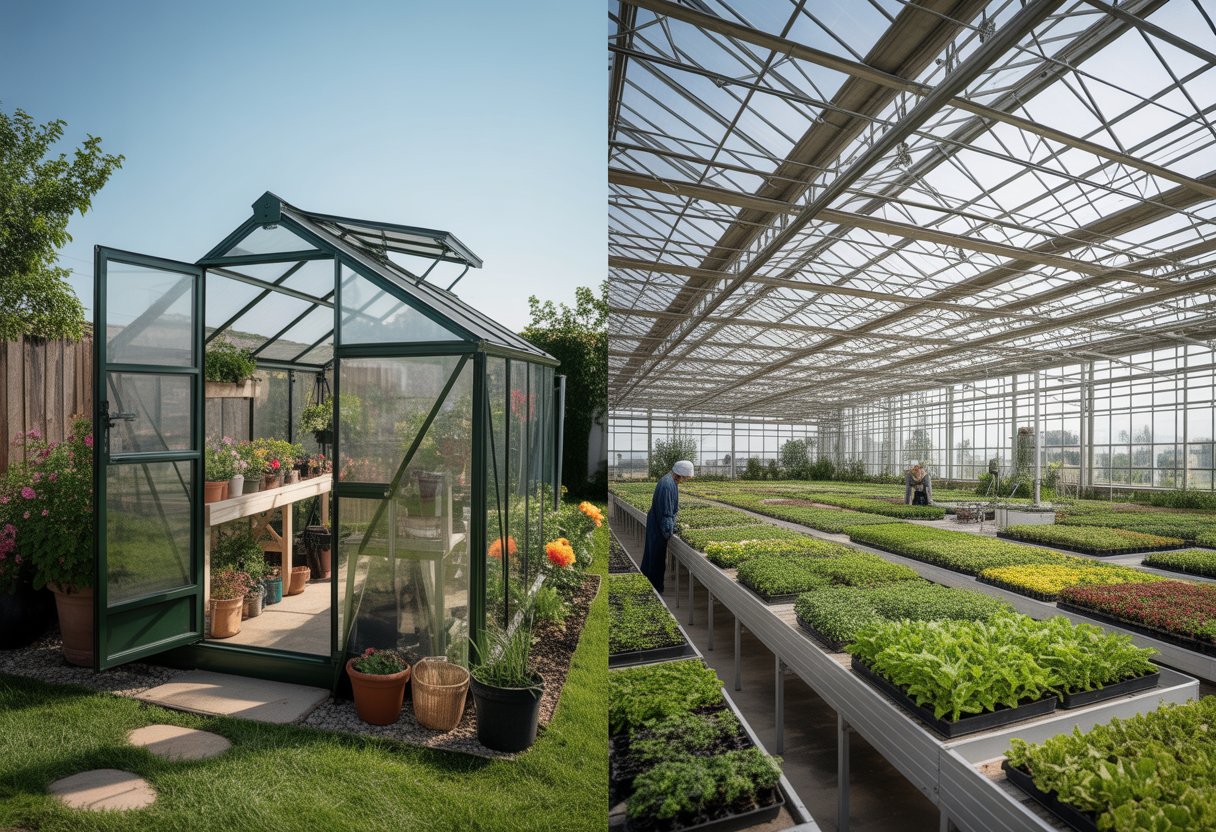
When you’re picking or planning a greenhouse, how it’s built and set up really makes a difference. Materials, layout, and whether you choose a ready-made kit all shape your experience.
These details come together to make your greenhouse practical and, honestly, a lot more fun.
Common Construction Materials
Greenhouses use all sorts of materials, and what you pick changes how your plants grow and how long your greenhouse lasts.
Most smaller hobby greenhouses use aluminum frames—they’re light and won’t rust. You’ll usually see them with plastic coverings, like polyethylene film or polycarbonate panels, which trap heat but still let in light.
Polycarbonate’s tougher and lasts longer, but it’s pricier. Commercial greenhouses lean toward steel frames for strength and durability, and they often use glass or heavy-duty plastic covers.
Glass lets in loads of light but can break and is heavier, so you need a solid frame. You’ll want to pick materials based on your budget, climate, and how much upkeep you’re willing to do.
Plant Benches and Growing Space
How you use the inside space matters just as much as the structure itself. Hobby greenhouses often use benches to lift plants off the ground, which makes watering and care easier.
Benches help keep things organized and improve airflow, which keeps mold at bay. In commercial setups, growers maximize space with taller benches and sometimes even multiple levels, stacking plants vertically.
For hobbyists, simpler bench setups usually work best—no need for super fancy designs. Think about what you want to grow, how much room you need, and how often you’ll be in there.
Even a small greenhouse feels bigger with smart bench planning and open pathways.
Greenhouse Kits for Hobbyists
If you’re new or just want something quick and easy, greenhouse kits make a lot of sense.
These kits include the main parts—frames, covers, sometimes benches—ready to assemble. They save you the headache of figuring out sizes or mixing and matching pieces.
Most hobby kits use lightweight materials and clear film or panels, so you can handle them yourself. You’ll find kits for every budget and space, from tiny backyard greenhouses to larger hobby setups.
Some kits even come with ventilation options, like roll-up sides, to help you control temperature and airflow.
If you’re curious, check out places that offer a wide range of greenhouse supplies—you’ll probably find a kit that fits your needs.
Environmental Control and Management
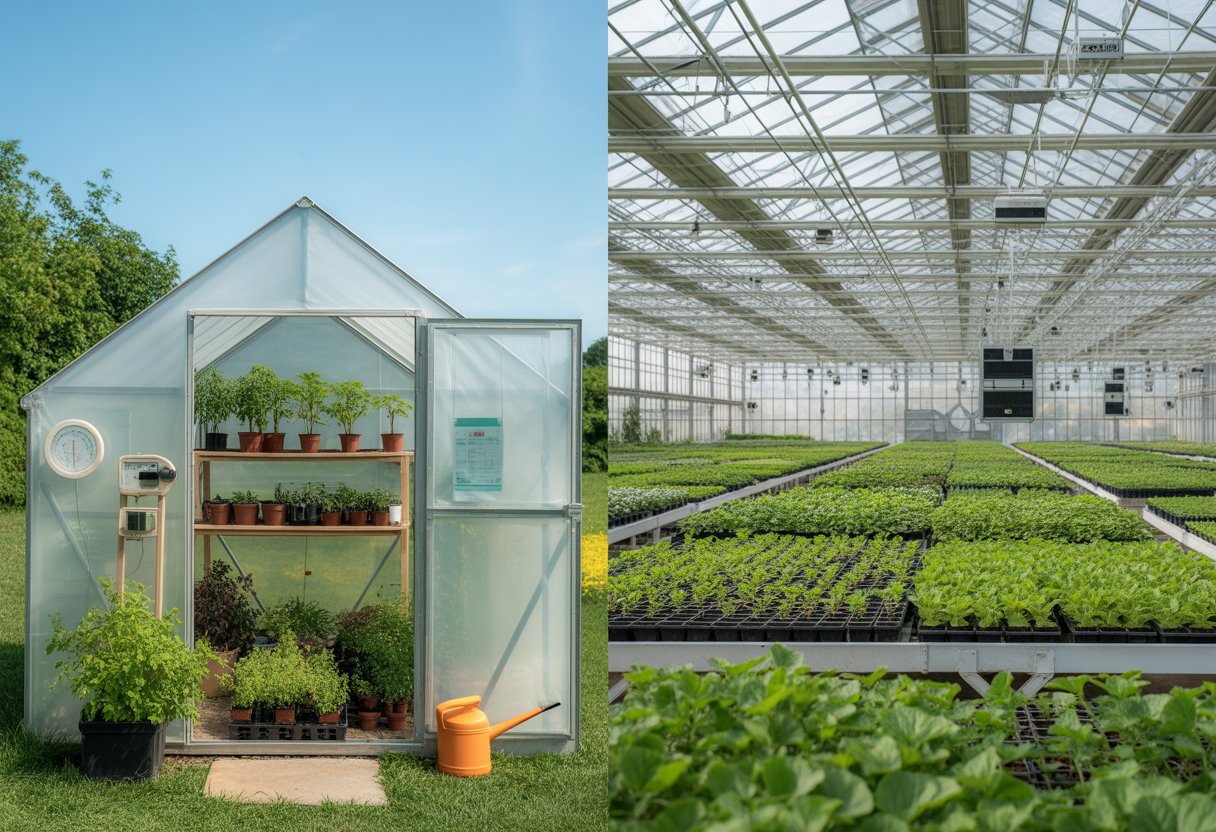
Keeping the right environment inside your greenhouse is huge. Whether you’re growing just for fun or running a commercial setup, you need to manage light, heat, and moisture so your plants thrive without wasting energy or money.
Sunlight, Shading Systems, and Shade Cloth
Sunlight’s kind of a mixed blessing for your greenhouse. It can supercharge your plants, but too much fries them, and too little just slows everything down. In a hobby greenhouse, you’ll probably slap up some shade cloth or brush on a shading compound—super cheap, easy, and you can peel it back when the seasons change.
Commercial greenhouses get fancy with automated shading systems. These systems open or close shades depending on how bright it gets outside. That keeps things steady and protects crops that cost real money.
You really want to think about which shade cloth to use. Lighter ones let in more light but still cool things off a bit. Darker cloth blocks more sun and heat, which is great if you’re working with shade-loving plants.
Ever left your greenhouse closed up on a scorching day? It turns into a sauna so fast. Shading systems help with that, so your plants don’t wilt or look miserable.
Heating, Cooling, and Humidity
Winter’s rough if you don’t plan for heating. Most hobby greenhouses end up with an electric heater or a basic solar collector to take the edge off. It’s always a balancing act—enough heat to keep things alive, but not so much you’re shocked by your next bill.
Commercial setups usually go for bigger heating systems, like gas heaters or large solar panels, and they’ll pair those with environmental controls to save energy. Some even recycle warm air to cut down on costs.
Cooling matters just as much. Side vents and exhaust fans yank out hot air when it’s baking in summer. Misting systems can bump up the humidity and cool things off by evaporation, which is a lifesaver in dry places.
Humidity’s a big deal. If it’s too dry, your plants stress out and get sick more easily. Humidifiers or misting systems keep things balanced, but you’ve gotta watch for mold if you overdo it.
Honestly, I struggled with humidity in my first greenhouse. It was always either desert-dry or way too soggy, and nothing liked it. Adding a simple exhaust fan and a misting routine really changed the game. It’s all about watching and making little tweaks.
Plant Growing Goals and Techniques
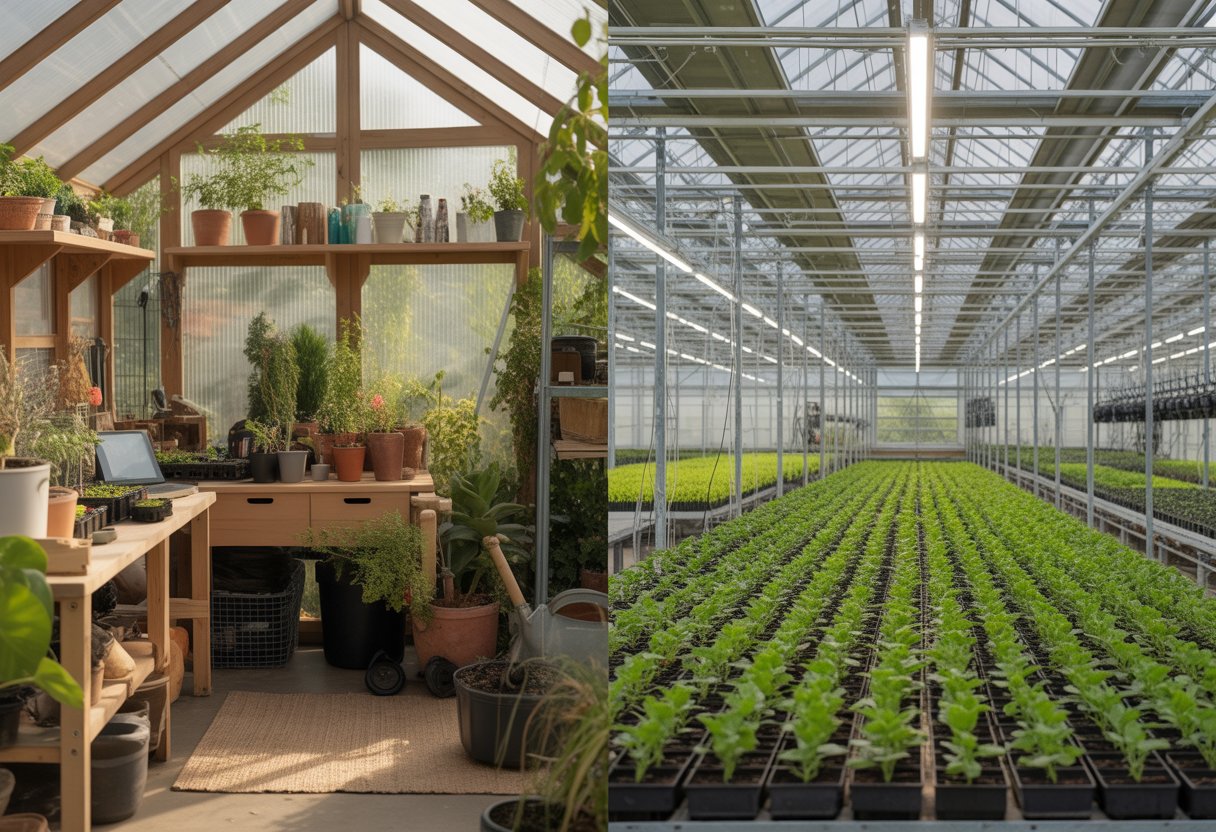
Your goals totally shape how you run your greenhouse. Want fresh veggies? Or maybe you’re after tropical plants? What you grow and how much space you have will change your approach.
Types of Plants and Vegetables Grown
In a hobby greenhouse, you’ll probably stick to a handful of veggies and flowers for yourself. Tomatoes, peppers, lettuce, and herbs are popular since they’re easy and don’t need a ton of room.
Commercial greenhouses scale up big time. They’ll grow all sorts of stuff—cucumbers, strawberries, whatever sells. Bigger spaces mean you can dial in the environment and grow plants year-round.
If you’re itching to try new plants, there’s no shortage of options for seeds on Amazon.com : greenhouse seeds.
Tropical Plant Care
Tropical plants are a bit needy. They want steady warmth, plenty of humidity, and good light. In a hobby greenhouse, you’ll probably need heaters and humidifiers during cold snaps to keep them happy.
Commercial greenhouses usually handle this with automated systems that keep temperature and humidity on point. That way, tropicals grow faster and you don’t have to fuss as much.
Check for pests and diseases often—tropicals are sensitive. Shade cloths can help shield them from harsh sunlight that might scorch their leaves.
Supporting Healthy Plant Growth
Healthy plants need decent airflow, water, and nutrients. In a hobby greenhouse, you’ll do most of the watering and feeding by hand, getting a feel for what each plant wants.
Commercial growers lean on irrigation systems and automatic feeders for consistent results and to save time. Temperature control is a must for everyone, especially when things get cold.
Give your plants a boost by using clean pots, fresh soil, and leaving enough space between them. Don’t cram things together—plants need their light and air. Seed starter trays and humidity domes are great for getting seedlings going, and you can find them on Amazon seed starter trays and kits.
Operational Considerations
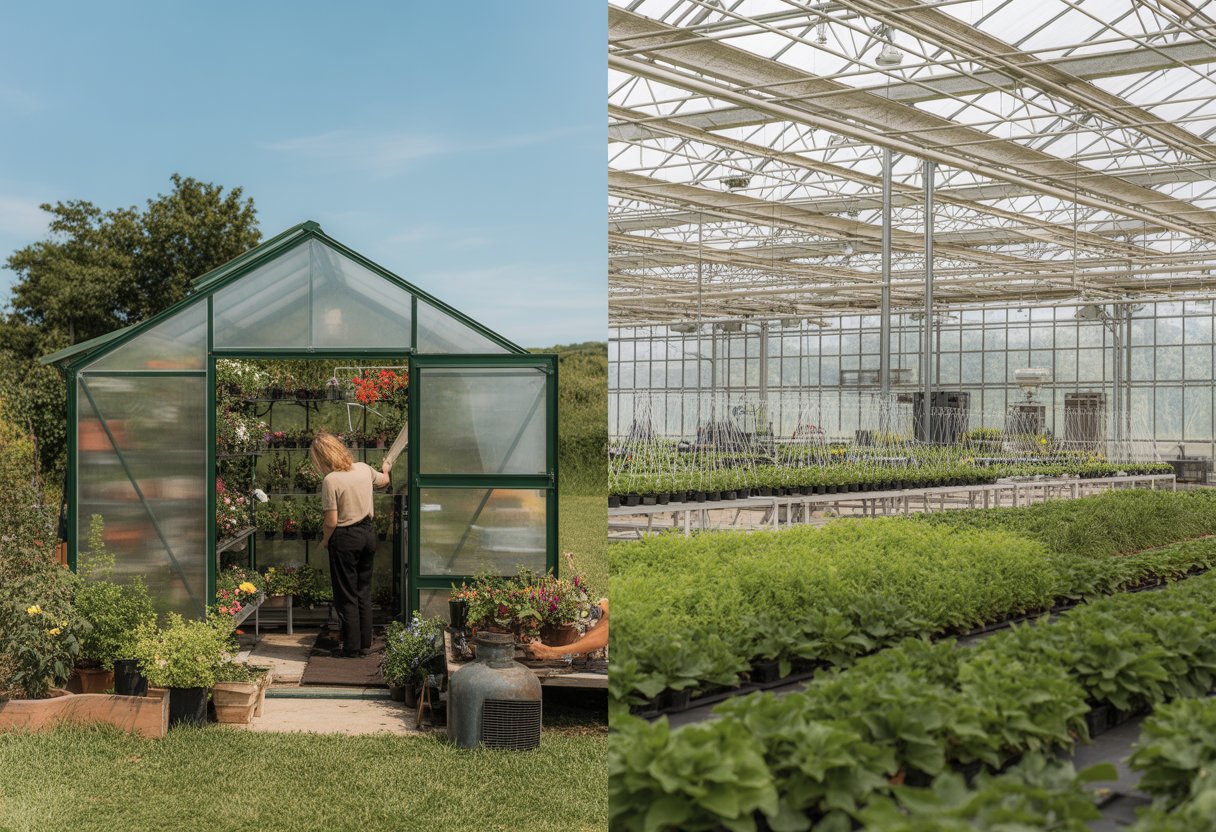
Running a greenhouse—hobby or commercial—means you’ve always got something to do. From daily upkeep to pest patrol, these little jobs keep your plants happy. Getting into the habit early saves you headaches later.
Daily Care and Maintenance
Every day brings a new round of chores in the greenhouse. Hobby greenhouses are easier since you’re working with less space. You’ll check humidity, water your plants, and make sure vents or heaters are doing their thing. I like to do a quick walk-in every morning—catches problems before they get big.
Commercial greenhouses take it up a notch. You have to monitor automated systems like irrigation and temperature controls, and you can’t just set and forget. Sometimes you’ll tweak settings a few times a day. It’s more work across a bigger space, but those systems help lighten the load.
Keep things clean, no matter the size. Dirty pots, spilled soil, and dead plant bits invite disease. Just wiping down surfaces and tossing out old leaves does wonders. It’s not exciting, but it really pays off.
Pest Management and Control
Pests are a pain, no matter how big your greenhouse is. In hobby setups, bugs sneak in through open windows or hitch a ride on new plants. Spotting them early is key—you want to catch them before they take over. I keep a magnifying glass nearby just to check leaves for tiny eggs or critters.
Natural controls like ladybugs or neem oil work well in smaller setups. You don’t want harsh chemicals around your favorite plants—or yourself. Good hygiene, like cleaning tools and removing dead leaves, goes a long way in stopping pests before they get started.
Commercial greenhouses can’t mess around as much. Sometimes you need heavier-duty solutions and targeted pesticides, but you have to be careful not to wreck your crops or the environment. Integrated pest management (IPM) is popular—it mixes biological, cultural, and chemical tactics to keep pest numbers down. You’ll want to keep records so you know what’s working and when to act.
Prevention is always easier than fighting an infestation. Seal up gaps and keep new plants separate for a bit—trust me, it saves you a ton of hassle down the road.
Cost, Investment, and Value
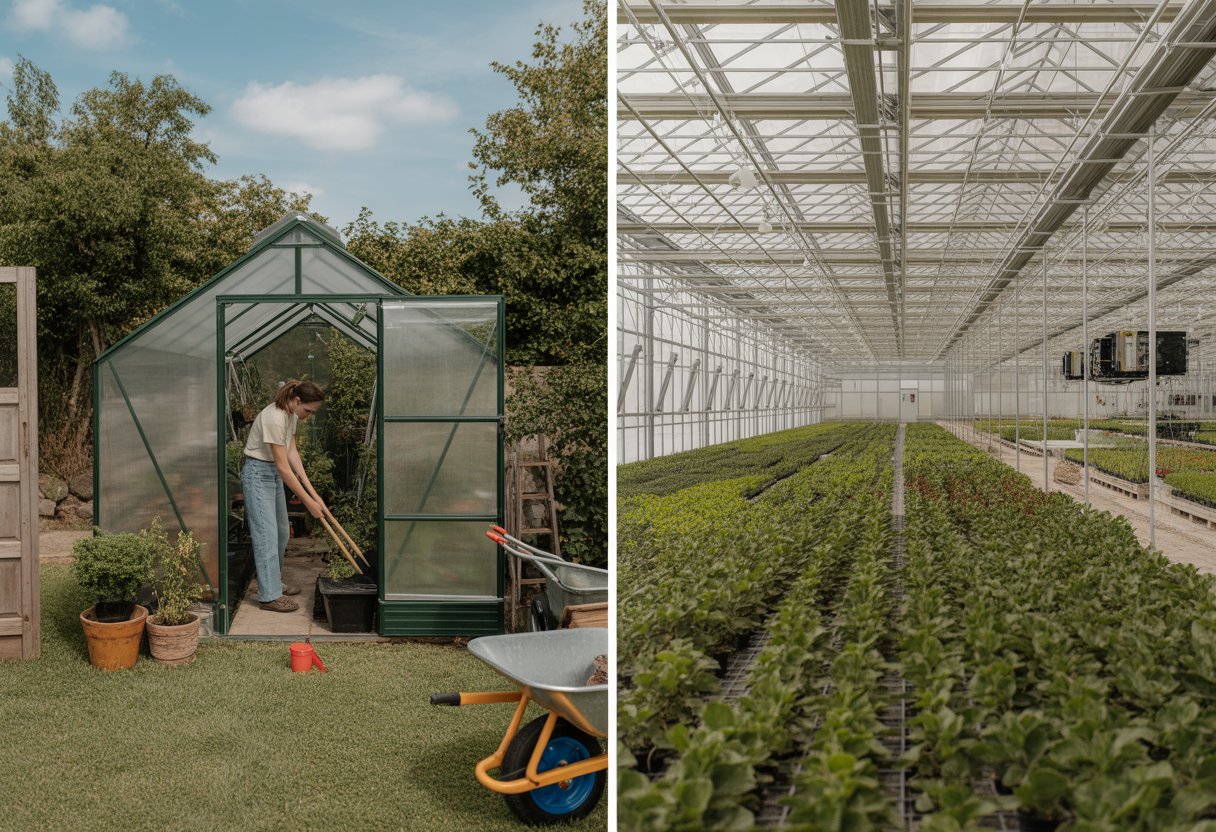
Hobby and commercial greenhouses are worlds apart when it comes to what you spend and what you get back. Some costs hit you right away, while others sneak up over time. Let’s dig into what you’re actually signing up for.
Initial Setup and Material Costs
For a hobby greenhouse, expect to spend a few hundred to a couple thousand bucks. Kits are usually cheaper and way less hassle than building from scratch, especially if you’re working solo. Most kits come in small or medium sizes and use polycarbonate panels or polyethylene covers.
Commercial greenhouses? That’s a whole different story. Starting costs can run from $12,000 to $30,000 or more if you want a pro build. If you’re going really big—like 1,000 square feet or more—you’ll hit five figures fast. You’ll pay upfront for tougher materials and climate controls, but they last longer and save you money later.
Ongoing Expenses and Energy Use
Heating is where the bills can get wild, especially if you’re somewhere cold. Hobby greenhouses don’t need massive heaters, but you’ll still notice your energy bill jump in winter. You can soften that blow with things like thermal curtains or bubble wrap insulation.
Commercial growers burn through more energy, not just for heat but for lights and humidity control too. Monthly bills can get hefty. Some use misting systems or heat mats to keep plants happy, but that adds up. If you’re serious about keeping costs down, invest in energy-efficient systems. Watching the meter spin isn’t fun, trust me.
Frequently Asked Questions
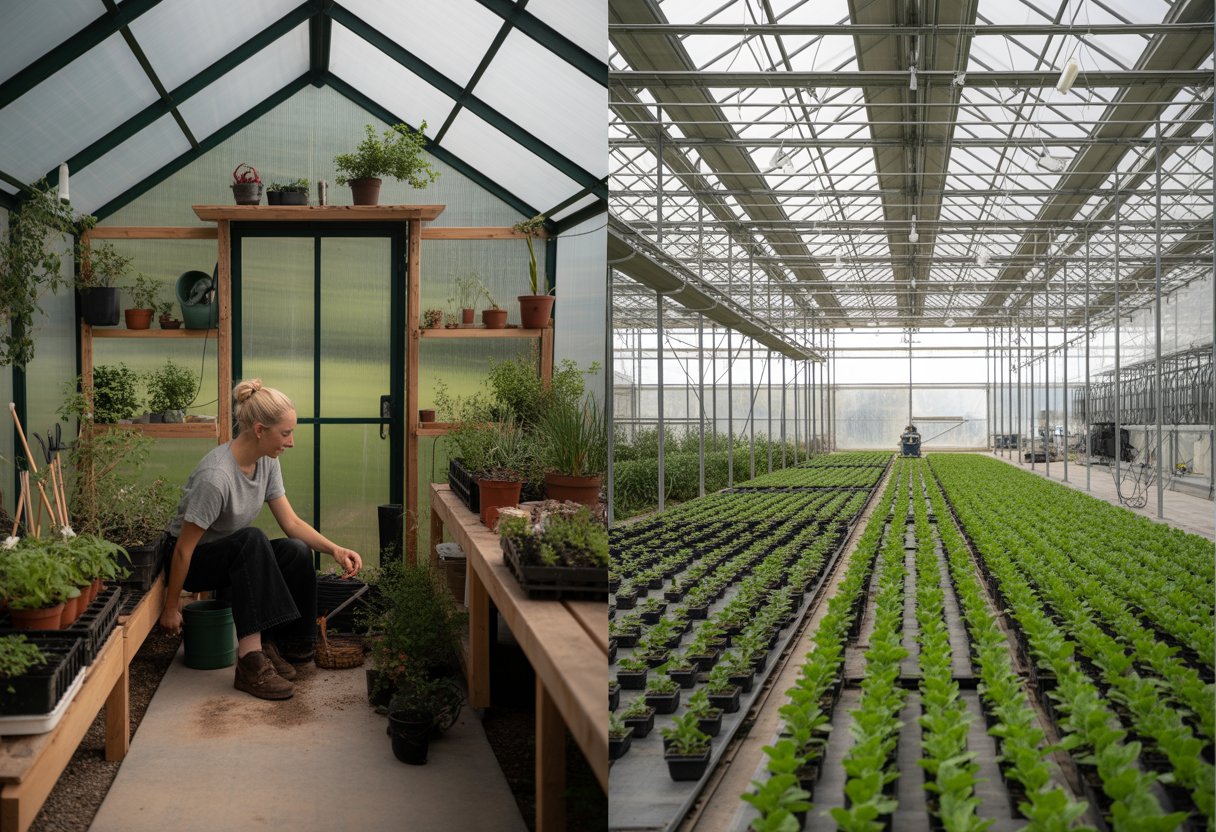
Greenhouses come in all shapes and sizes. How you use them really depends on your goals and budget. If you think through costs, features, and how you’ll keep things running, you’ll avoid a lot of stress later.
What are the main differences in cost between a hobby and a commercial greenhouse?
A hobby greenhouse won’t cost you nearly as much as a commercial one. Since it’s for personal use, you can keep it small and simple. Commercial greenhouses need to cover way more ground and use stronger materials, so the price jumps.
With commercial setups, you’ll also spend more on heating, irrigation, and other equipment you’d never need in a backyard. If you’re just starting out, hobby size is the way to go—no need to go big and bust your wallet.
Can you share some tips on how to effectively use a hobby greenhouse?
Grow what you actually like—flowers, veggies, whatever. Keep an eye on sunlight and airflow; too much heat can wipe out your plants in a hurry. I once left my greenhouse door closed on a hot day and nearly cooked everything inside.
Rotate crops with the seasons. Your hobby greenhouse is basically a mini garden lab where you can try new stuff without much risk. Don’t be afraid to use shelves or hanging pots to pack more in.
What are the essential features to include in any greenhouse setup?
You need good light. Go for clear materials that let sun in but still shield against bad weather. Ventilation is just as important—airflow keeps things fresh and prevents disease.
A simple watering system helps, even if it’s just basic drip irrigation. Depending on your weather, you might need heating or shade cloth too. And don’t skimp on a sturdy frame—wind and snow can destroy a flimsy greenhouse.
What should newcomers to greenhouse gardening know before they begin?
Don’t expect instant results. Greenhouses help, but patience and a bit of trial and error are part of the deal. Test your soil and jot down notes to track what’s working.
Start small so you can get used to managing temperature, moisture, and pests. Otherwise, it’s easy to get overwhelmed. And honestly, local gardeners usually have the best advice for your area.
How should one go about maintaining a greenhouse for optimal growth?
Keep it clean. Old leaves, dirt, and dead plants attract bugs and disease. Try to check your greenhouse every day, or at least as often as you can.
Fix broken panels and clean the glass or plastic—dirty surfaces block sunlight. Watch humidity and temperature with simple tools. Sometimes I just stick a note on the glass to remind myself to open a window when it’s hot.
How can one determine the profitability of running a commercial greenhouse?
Profitability really comes down to what you grow, what you manage to sell, and how much it all costs you. I’d suggest keeping detailed records—stuff like seeds, labor, energy bills, and all those random supplies that add up.
Smaller commercial growers often struggle to compete, unless they find a niche market or create some kind of value-added product. Have you checked what’s selling at your local market or online lately?
Be ready to switch up your crops or tweak your methods if things aren’t panning out the way you hoped. It’s a tough business, sure, but honestly, it can be pretty rewarding if you’re into the work.