
Sierra Greenhouse Insights
Expert Guide to Greenhouse Lighting Systems (2025)
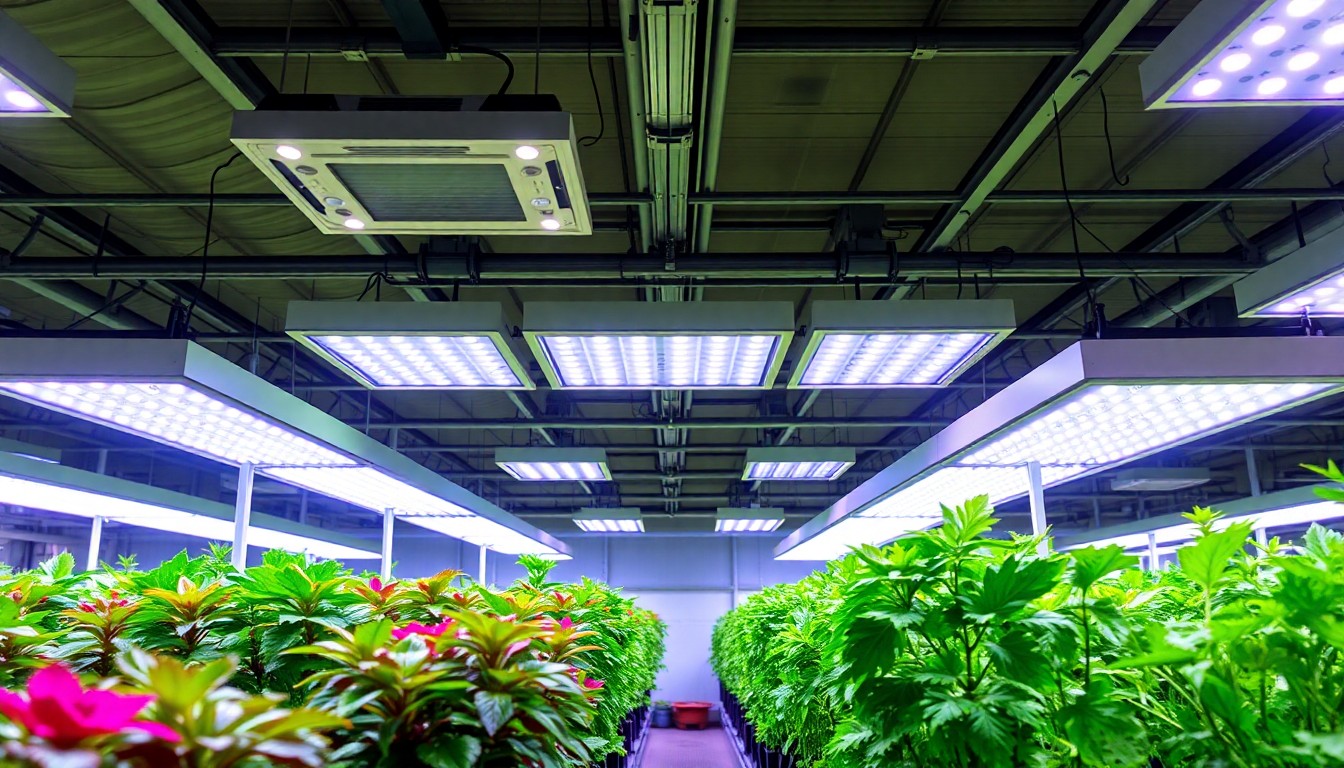
Did you know that selecting the right greenhouse lighting system can increase yields by up to 40% while reducing energy costs by 35%? In 2025, cutting-edge LED technology has revolutionized how plants receive light, with dynamic spectrum control and AI-driven systems customizing light recipes for each growth stage. This comprehensive guide walks you through everything from fundamental light science to advanced system selection, helping you create the perfect illumination strategy for your greenhouse.
Table of Contents
- Light Fundamentals
- Natural Light
- Artificial Systems
- LED Technology
- Light Planning
- Installation Guide
- Control Systems
- Maintenance Tips
- Efficiency Guide
- Selection Help
Light Fundamentals for Plant Growth
Understanding the science of light is essential for making informed lighting decisions in your greenhouse.
Critical Light Concepts for Plant Development
- Photosynthetically Active Radiation (PAR): The 400-700nm light wavelength range plants use for photosynthesis
- Light Intensity: Measured in μmol/m²/s (micromoles per square meter per second) or PPFD (Photosynthetic Photon Flux Density)
- Daily Light Integral (DLI): Total PAR delivered in 24 hours, measured in mol/m²/day
- Spectrum Quality: The distribution of wavelengths across the light spectrum
- Photoperiod: The duration of light exposure plants receive daily
- Light Uniformity: How evenly light is distributed across your growing area
Understanding Light Types and Their Impact
-
Natural Sunlight Characteristics
- Full spectrum light source (300-1100nm) with seasonal variations
- Intensity varies by time of day, season, and weather conditions
- Contains essential blue, green, red, and far-red wavelengths for plant development
- Provides UV light that influences plant morphology and secondary metabolites
- Free energy source but highly variable and sometimes insufficient
-
Artificial Light Properties
- Precisely controlled spectrum tailored to plant requirements
- Consistent intensity regardless of external conditions
- Programmable photoperiods for specific crop needs
- Supplemental or sole-source depending on greenhouse design
- Energy costs must be balanced against productivity gains
Light Spectrum Science: Understanding Plant Responses to Different Wavelengths
Blue Light (400-500nm)
- Promotes vegetative growth and compact plant structure
- Regulates stomatal opening for proper gas exchange
- Influences chlorophyll formation and phototropism
- Optimal levels: 10-30% of total spectrum for most plants
Green Light (500-600nm)
- Penetrates deeper into plant canopy than other wavelengths
- Supports photosynthesis in lower leaf layers
- Influences specific morphological responses
- Optimal levels: 10-25% of total spectrum for most plants
Red Light (600-700nm)
- Primary driver of photosynthesis efficiency
- Stimulates flowering and fruiting responses
- Influences internode elongation and leaf expansion
- Optimal levels: 40-60% of total spectrum for most plants
Far-Red Light (700-800nm)
- Regulates flowering time and shade responses
- Affects plant architecture and stem elongation
- Interacts with phytochrome system to influence growth
- Optimal levels: 5-15% of total spectrum for most plants
UV Light (280-400nm)
- Enhances production of secondary metabolites and protective compounds
- Improves fruit color and nutritional quality
- Influences plant stress responses and defense mechanisms
- Optimal levels: 1-3% of total spectrum for most plants
Natural Light Optimization Strategies
Maximizing natural sunlight should be your first priority before adding artificial lighting.
Strategic Greenhouse Design Elements for Light Optimization
-
Advanced Structural Considerations
- Roof Angle Science: 25-35° pitch maximizes winter light transmission (region-dependent)
- Orientation Optimization: East-west orientation provides 20-25% more winter light than north-south
- Glazing Selection: Modern diffused glazing materials scatter light, reducing shadows and light stress
- Support Structure Minimization: Carbon fiber and advanced steel designs reduce shadow patterns by 15-20%
-
Sophisticated Light Management Technologies
- Automated Shade Systems: Computer-controlled light diffusion with transmission rates from 30-70%
- Motorized Reflector Arrays: Mobile ceiling reflectors tracking sun movement for 30% light redistribution
- Smart Light-Diffusion Screens: Selective screens that diffuse light without reducing PAR levels
- Photochromic Glazing: Advanced materials that automatically adjust light transmission based on intensity
Science-Based Optimization Strategies for Maximum Efficiency
-
Precision Layout Planning
- Building Orientation Calibration: Fine-tuning greenhouse positioning to 1-2° precision for optimal light gain
- Plant Arrangement Algorithms: Computational models for plant spacing based on seasonal light patterns
- Vertical Space Utilization: Tiered growing systems with light reflection calculations
- Microclimate Mapping: Creating detailed light distribution maps to match plant positioning with light needs
-
Advanced Material Selection for Light Control
- Next-Gen Covering Materials: High-diffusion, anti-drip, anti-dust glazing with 93%+ PAR transmission
- Selective Light Transmission: Films that enhance specific wavelengths while blocking unwanted radiation
- Thermal Properties Balance: Materials optimized for both light transmission and energy conservation
- Longevity Considerations: UV-stabilized coverings maintaining 90%+ transmission for 10+ years
Artificial Lighting Technologies in 2025
Artificial lighting systems have evolved dramatically, with LED technology now dominating the market.
Current Lighting Technology Comparison
-
LED Lighting Systems (Market Share: 75-80%)
- Efficiency Rating: 2.7-3.5 μmol/J (highest in industry)
- Lifespan: 50,000-100,000 hours (5-10 year operational life)
- Spectrum Control: Full customization across 380-780nm with precision tuning
- Heat Generation: Minimal (80-90% less than HPS), allowing close canopy placement
- Key Benefits: Spectrum customization, energy efficiency, minimal heat, programmability
- Limitations: Higher initial investment, requires more technical knowledge
- Energy Savings: 40-60% compared to traditional lighting
-
High-Pressure Sodium (HPS) (Market Share: 15-20%)
- Efficiency Rating: 1.7-2.1 μmol/J
- Lifespan: 10,000-24,000 hours (1-3 year operational life)
- Spectrum Range: Fixed spectrum weighted toward yellow/red (limited blue)
- Heat Generation: Significant (requires 3-4' distance from canopy)
- Key Benefits: Lower initial cost, proven reliability, good flowering spectrum
- Limitations: High energy use, heat management, fixed spectrum, bulky fixtures
- Best Applications: Budget operations, hybrid systems, flowering-focused crops
-
Hybrid Systems (Market Share: 5-10%)
- Configuration: Combining LED and HPS for balanced approach
- Spectrum Advantage: HPS provides baseline red/far-red while LEDs deliver blue/controlled spectrum
- Efficiency Balance: 2.0-2.5 μmol/J average system efficiency
- Installation Strategy: HPS for ambient lighting, LED for targeted spectral needs
- Transitional Benefit: Allows gradual upgrade from HPS to full LED
- Energy Profile: 25-35% savings compared to pure HPS
- Best Applications: Large operations transitioning to LED, cold climate operations utilizing heat
LED Technology Revolution in 2025
Advanced LED solutions have transformed greenhouse lighting capabilities in just a few years.
Revolutionary LED Greenhouse Technology Benefits
-
Quantifiable Efficiency Advantages
- Energy Efficiency: Average 3.0+ μmol/J efficiency (60% higher than HPS)
- Operational Cost Reduction: 30-50% lower electricity costs for equivalent light levels
- Maintenance Savings: 80-90% reduction in bulb replacement and servicing costs
- Space Utilization: Compact designs allow 15-20% more growing area with multi-tier systems
- Production Increases: Yield improvements of 15-35% through optimized spectrums
-
Cultivation Advantages Through Advanced Control
- Compact Growth Control: Precise blue wavelength ratios prevent stretching and promote lateral growth
- Flowering Management: Red/far-red ratio manipulation for controlled flowering timing
- Nutritional Enhancement: Targeted UV exposure increases antioxidant and flavor compound production
- Disease Resistance: Specific wavelength combinations enhance plant immune responses by 20-30%
- Consistent Year-Round Production: Elimination of seasonal light fluctuations for predictable yields
2025's Most Advanced LED Technologies
-
Cutting-Edge System Types
- Dynamic Spectrum LED Arrays: Real-time adjustable spectrum across 8+ wavelength channels
- Vertical Farm-Specific LED Systems: Ultra-thin panels designed for multi-tier installations
- PFAS-Free Light Solutions: Environmentally friendly LED designs avoiding forever chemicals
- Integrated Communication Systems: Fixtures with wireless mesh networking and diagnostic monitoring
- Plant-Response Feedback Systems: Sensors that monitor plant responses and adjust lighting accordingly
-
Premium LED Categories
- Full-Spectrum White + Supplemental: Combining natural-appearing white with crop-specific wavelengths
- Multi-Channel Programmable: Independent channel control for complete spectrum customization
- UV-Enhanced Systems: Integrated UV-A/UV-B diodes for secondary metabolite enhancement
- Far-Red Specialized Arrays: Enhanced flowering control through managed far-red ratios
- Quantum-Dot Enhanced Technology: Revolutionary phosphor technology for precise wavelength delivery
Strategic Light Planning for Optimal Results
Developing a comprehensive lighting strategy is essential for maximizing productivity and efficiency.
Scientific Lighting Design Process
-
Comprehensive Needs Assessment
- Plant-Specific Light Requirements: Database-driven approach matching crops to DLI needs
- Rigorous Space Analysis: 3D modeling of greenhouse with shadow mapping and light distribution
- Financial Analysis: Detailed ROI calculations based on crop value, energy costs, and fixture lifespan
- Environmental Factors: Climate data integration for natural light availability predictions
-
Advanced System Design Methodology
- Light Calculation Software: Computational models predicting PPFD at various heights and positions
- Smart Layout Planning: Strategic fixture positioning for maximum uniformity (±10% variance target)
- Control System Selection: Matching controller capabilities to operational complexity needs
- Future-Proofing Planning: Expandability considerations for technology upgrades
Implementation Scheduling Best Practices
-
Coverage Mapping Techniques
- Light Level Profiling: Creating detailed PPFD distribution maps at multiple canopy heights
- Identification of Dark Spots: Computational analysis of areas below target PPFD thresholds
- Overlap Zone Optimization: Calculating ideal fixture overlap percentage (15-20% recommended)
- Height Factor Analysis: Determining optimal mounting heights for uniformity vs. intensity balance
-
Tactical Scheduling Development
- Daily Light Cycle Programming: Creating crop-specific daily light schedules with intensity variation
- Seasonal Adjustment Protocols: Predetermined seasonal changes to compensate for natural light
- Growth Phase Integration: Automated spectral changes synchronized with plant development stages
- Energy Management Strategies: Peak-use avoidance and demand-response program integration
Installation Best Practices
Proper installation is critical to system performance, safety, and longevity.
Professional Infrastructure Preparation
-
Electrical System Requirements
- Load Capacity Assessment: Professional evaluation of electrical capacity (typically 15-25W/sq.ft needed)
- Circuit Protection Design: GFCI protection and dedicated circuits for lighting systems
- Voltage Stability Systems: Voltage regulators for areas with fluctuating power quality
- Backup Power Integration: Generator or battery backup system connections for critical applications
- Energy Monitoring Equipment: Installation of smart meters for performance tracking
-
Structural and Safety Considerations
- Weight-Bearing Analysis: Engineering evaluation for fixture support (especially for heavy fixtures)
- Water-Resistant Installation: IP65+ rated equipment and sealed connections for high-humidity areas
- Heat Management Systems: Ventilation planning for heat dissipation in enclosed areas
- Access Planning: Maintenance pathways and service points for long-term maintenance
- Emergency Shutdown Systems: Centralized emergency cutoff systems for safety
Precision Installation Procedures
-
Fixture Mounting Techniques
- Uniform Height Calibration: Laser-level installation ensuring consistent fixture heights (±0.5" tolerance)
- Secure Mounting Methods: Vibration-resistant mounting systems preventing fixture movement
- Optimized Angle Positioning: Reflector and directional fixtures positioned for maximum coverage
- Cable Management Systems: Professional routing and support for power and control cabling
- Modularity Planning: Installation allowing for future expansion or reconfiguration
-
System Testing and Certification Protocols
- Light Level Verification: PPFD measurement at multiple points confirming design specifications
- Coverage Uniformity Testing: Grid-pattern testing ensuring consistent light distribution
- Control System Programming: Professional setup and testing of all automation features
- Electrical Safety Certification: Inspection and certification by qualified electricians
- Documentation Package: Complete system documentation including maps, specifications, and warranties
Advanced Control Systems for Precision Management
Modern lighting control technologies enable unprecedented precision in light management.
State-of-the-Art Control Technologies
-
Smart Controller Options for 2025
- AI-Driven Adaptive Controllers: Systems that learn plant responses and self-optimize lighting recipes
- Cloud-Connected Management Platforms: Remote control with data analytics and multi-facility management
- Wireless Mesh Control Networks: Self-healing control systems with 99.9% reliability ratings
- Open-API Integration Hubs: Controllers that connect with climate, irrigation, and farm management systems
- Multi-Zone Independent Control: Separate recipes for different greenhouse sections and crop varieties
-
Sensor Integration Technologies
- PAR Sensor Networks: Real-time light measurement with automatic supplemental light adjustment
- Spectral Quality Monitors: Advanced sensors measuring spectral distribution at canopy level
- Plant Response Sensors: Chlorophyll fluorescence and growth rate monitoring tied to lighting controls
- Environmental Integration: Combined light/temperature/humidity/CO₂ management for holistic growing
- Energy Monitoring Systems: Real-time energy consumption tracking with efficiency optimization
Programming Sophistication Levels
-
Basic Through Advanced Scheduling Options
- Photoperiod Management: Precise day length control with sunrise/sunset simulation
- Intensity Scheduling: Variable light levels throughout the day matching plant natural rhythms
- Spectrum Shifting Programs: Dynamic spectrum changes from blue-dominant morning to red-rich evening
- Seasonal Simulation: Recreating seasonal light changes for photoperiod-sensitive crops
- Weather-Responsive Adaptation: Cloud sensors triggering supplemental lighting when natural light drops
-
Cutting-Edge Programming Capabilities
- Recipe Libraries: Pre-programmed lighting recipes for hundreds of crop varieties
- Growth Phase Automation: Systems that track days from planting and automatically adjust lighting
- Energy-Optimization Algorithms: Smart scheduling avoiding utility peak rates while maintaining DLI
- Crop-Specific Light Management: Custom programs for seedlings, mother plants, and production areas
- Machine Learning Enhancement: Programs that refine lighting recipes based on harvest results
Comprehensive Maintenance Protocols
Proper lighting system maintenance ensures optimal performance and maximum lifespan.
Evidence-Based Maintenance Schedules
-
Regular Inspection and Cleaning Program
- Weekly Visual Inspections: Quick checks for visible damage, condensation, or connection issues
- Bi-Weekly Light Measurement: Sample PPFD readings to track light output degradation (2-5% annual normal)
- Monthly Cleaning Protocol: Removing dust and residues from fixtures (15-25% light loss if neglected)
- Quarterly Connection Inspection: Checking all electrical connections for corrosion or loosening
- Semi-Annual Fixture Cleaning: Complete teardown cleaning of fixtures and reflectors
-
Documentation and Performance Tracking
- Maintenance Log Requirements: Digital or physical records of all service activities and observations
- Performance Baseline Establishment: Regular light measurements compared against initial installation data
- Energy Consumption Monitoring: Tracking kWh usage to identify efficiency degradation
- Growth/Yield Correlation: Connecting maintenance activities to production outcomes
- Replacement Part Inventory: Maintaining stock of critical components for minimal downtime
Component-Specific Maintenance Techniques
-
LED Fixture Care Best Practices
- Proper Cleaning Agents: Using only manufacturer-approved cleaning solutions
- Heat Sink Maintenance: Ensuring cooling fins remain dust-free for thermal management
- Driver Inspection Protocol: Checking for swelling, discoloration, or unusual noises
- Lens/Reflector Care: Specialized cleaning to prevent micro-scratches and degradation
- IP Rating Preservation: Maintaining water/dust seals and replacing damaged gaskets
-
Control System Maintenance
- Software Update Procedures: Regular controller firmware and software updates
- Sensor Calibration Schedule: Quarterly verification and recalibration of all sensors
- Backup System Testing: Monthly testing of backup power and fail-safe systems
- Network Security Updates: Maintaining current security protocols for connected systems
- Database Maintenance: Regular backup and verification of all lighting recipes and settings
Efficiency Guide
Maximizing energy efficiency and performance.
Energy Management
-
Usage Optimization
- Schedule efficiency
- Light levels
- Zone control
- Natural integration
-
Cost Reduction
- Peak management
- Efficiency upgrades
- Smart controls
- Maintenance timing
Performance Tips
-
Output Optimization
- Reflector care
- Bulb maintenance
- Position adjustment
- Coverage check
-
System Efficiency
- Energy monitoring
- Heat management
- Control optimization
- Schedule refinement
Selection Help
Choosing the right lighting solution.
Decision Factors
-
Space Analysis
- Area size
- Height limits
- Plant types
- Budget range
-
System Requirements
- Light levels
- Spectrum needs
- Control options
- Energy limits
Recommendations
-
Small Operations
- LED basics
- Simple controls
- Natural integration
- Budget focus
-
Large Systems
- Advanced LED
- Smart controls
- Zone management
- Efficiency focus
Conclusion: Creating Your Optimal Greenhouse Lighting Environment
The greenhouse lighting landscape of 2025 offers unprecedented control over your growing environment through scientific advances in LED technology and control systems. By implementing the comprehensive strategies outlined in this guide, you can create a precision lighting environment that optimizes both plant productivity and operational efficiency.
Remember that even the most advanced lighting technology must be part of an integrated approach that includes proper climate control, nutrient management, and plant care. Begin with a thorough assessment of your specific growing needs, develop a strategic implementation plan, and regularly update your approach as technology continues to evolve.
Key Implementation Takeaways
- Perform a thorough DLI assessment for your specific crops before selecting lighting systems
- Balance initial investment against long-term operational savings when comparing technologies
- Invest in quality fixtures with demonstrable efficiency and longevity metrics
- Develop comprehensive maintenance protocols to protect your lighting investment
- Monitor results against baseline metrics to continuously refine your lighting strategy
- Stay current with lighting technology developments through industry publications and research
Additional Resources
Related Articles
Useful Tools
Need expert guidance on greenhouse lighting? Contact our specialists for professional consultation.