
Sierra Greenhouse Insights
Economics of Expanding Vertically Inside a Greenhouse
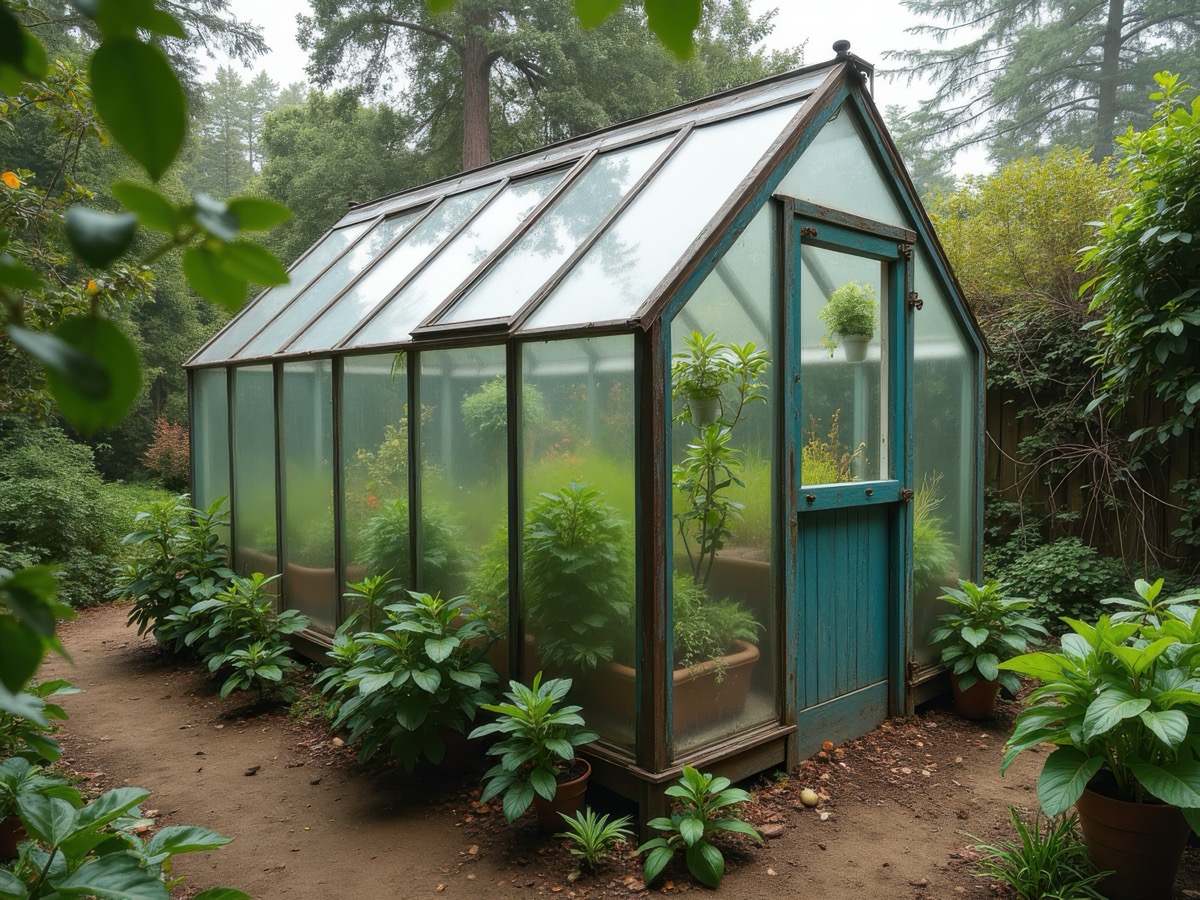
Transforming existing greenhouse operations through vertical expansion requires careful financial analysis balancing substantial upfront investments against dramatic yield increases and operational efficiencies. This comprehensive guide provides real-world cost breakdowns, ROI calculations, and decision frameworks helping growers make data-driven choices about vertical growing investments. For technical implementation details, see our guide on stacking hydroponic racks.
Understanding the economic landscape
Current market dynamics
The global vertical farming market, valued at $8.15 billion in 2024, projects explosive growth reaching $31.5 billion by 2030 at a 23% compound annual growth rate. This expansion reflects improving economics as technology costs decline while premium produce markets expand.
Traditional greenhouse operations increasingly face pressure to maximize returns from existing facilities as land costs escalate and urban markets demand local production. Vertical expansion offers a solution multiplying productive capacity without additional greenhouse construction.
Market analysis reveals properly executed vertical systems achieve revenues exceeding $100 per square foot annually, compared to $20-40 for traditional single-level greenhouse production. These figures make compelling cases for vertical investment despite higher initial costs.
Comparative cost structures
Vertical greenhouse retrofits cost 3-5 times more per square foot than traditional bench systems but deliver 3-5 times the yield when properly managed. Initial investments range from $25-60 per square foot of growing area depending on automation levels and crop types.
Operating costs increase modestly with vertical systems, primarily from supplemental lighting and climate control requirements. However, per-unit production costs often decrease 30-50% as fixed overhead spreads across dramatically increased yields.
Labor efficiency improves in well-designed vertical systems through centralized operations and automated material handling. Studies show 20-30% labor savings per pound of produce despite managing multiple growing levels.
Initial investment breakdown
Infrastructure costs
Basic vertical racking systems start at $15-25 per square foot of growing surface including structural supports and basic irrigation. Mobile systems increase costs to $30-45 per square foot but improve space utilization by 25-40%.
LED lighting represents the largest single expense at $50-100 per square foot for quality fixtures providing adequate supplemental lighting across multiple tiers. Prices continue declining with LED technology improvements, dropping 15-20% annually. Learn about LED interlighting strategies to optimize your investment.
Environmental control upgrades typically add $10-20 per square foot ensuring adequate air circulation, temperature uniformity, and humidity management in dense vertical canopies. Existing systems often require capacity increases of 30-50%.
Installation and integration
Professional installation adds 20-30% to equipment costs but ensures optimal performance and safety compliance. Experienced installers complete typical 5,000 square foot retrofits in 2-3 weeks minimizing production disruption.
Control system integration enabling automated irrigation, lighting, and climate management costs $5-10 per square foot. Advanced systems with crop monitoring and predictive analytics reach $15-20 per square foot.
Electrical upgrades accommodating LED lighting loads often require $5-15 per square foot depending on existing infrastructure. Three-phase power and dedicated circuits for each growing zone optimize performance.
Working capital requirements
Increased plant density requires proportionally higher working capital for seeds, growing media, and nutrients. Budget 20-30% above equipment costs for first-year operating supplies and contingencies.
Extended production cycles in vertical systems may delay initial revenue by 2-4 weeks compared to single-level operations. Financial planning should account for this cash flow gap during transition periods.
Reserve funds covering 3-6 months operating expenses provide cushions for unexpected challenges during vertical system optimization. Learning curves affect early productivity requiring patience and financial flexibility.
Revenue potential analysis
Yield multiplication factors
Conservative vertical implementations double production per greenhouse square foot through simple two-tier systems. Optimized operations with 3-5 tiers achieve proportional increases approaching 400% of baseline production.
Premium crop selection amplifies revenue gains beyond simple yield multiplication. High-value herbs, microgreens, and specialty produce generate $200-400 per square foot annually in vertical systems.
Year-round production in climate-controlled vertical environments captures peak seasonal pricing. Winter production of summer crops commands 200-300% premiums over in-season field production.
Market positioning advantages
Local production in vertical systems enables "harvested today" marketing commanding 20-30% price premiums over shipped produce. Freshness and flavor superiority justify premium positioning.
Consistent quality from controlled environments satisfies restaurant and retail requirements for reliable supply. Long-term contracts at premium prices provide revenue stability justifying expansion investments.
Sustainable production narratives resonate with conscious consumers willing to pay more for resource-efficient locally grown produce. Marketing vertical farming's environmental benefits supports premium pricing strategies.
Revenue modeling examples
Lettuce production scenario:
- Traditional: 10 crops/year × 0.5 lbs/sq ft × $4/lb = $20/sq ft annually
- 3-tier vertical: 10 crops/year × 1.5 lbs/sq ft × $5/lb = $75/sq ft annually
- Revenue increase: 275% with 25% price premium for local/sustainable
Herb production scenario:
- Traditional: 8 crops/year × 0.3 lbs/sq ft × $20/lb = $48/sq ft annually
- 4-tier vertical: 8 crops/year × 1.2 lbs/sq ft × $25/lb = $240/sq ft annually
- Revenue increase: 400% capturing restaurant premium markets
Operating cost considerations
Energy economics
LED lighting typically consumes 0.5-1.5 kWh per square foot monthly depending on crop requirements and natural light availability. At $0.10/kWh, monthly costs range $0.05-0.15 per square foot.
Heating costs often decrease 30-40% per unit production as vertical systems maximize greenhouse volume utilization. Fixed heating expenses spread across increased plant populations improve efficiency.
Cooling and dehumidification requirements increase 20-30% in vertical systems due to concentrated transpiration. However, per-plant costs remain comparable to traditional layouts.
Labor efficiency gains
Centralized harvesting in vertical systems reduces labor 20-30% compared to spreading across horizontal benches. Ergonomic working heights in properly designed systems reduce fatigue and increase productivity.
Automated irrigation and fertigation eliminate manual watering labor while improving consistency. Simple timer-based systems save 2-4 hours daily in 5,000 square foot operations. Explore complete greenhouse automation options.
Integrated pest management becomes more efficient with concentrated growing areas enabling thorough scouting and targeted interventions. Early detection in vertical systems prevents widespread infestations.
Material input optimization
Precise nutrient delivery in recirculating vertical systems reduces fertilizer costs 30-50% compared to run-to-waste greenhouse operations. Closed-loop systems capture and reuse expensive nutrients.
Growing media longevity improves in vertical systems with better drainage and aeration. Coconut coir and rockwool last 18-24 months versus 12-15 months in traditional systems.
Water consumption decreases 40-60% through efficient vertical irrigation systems with minimal runoff. Drought-stressed regions particularly value water conservation achievements.
ROI calculations and payback periods
Simple payback analysis
Calculate simple payback by dividing total investment by annual profit increase:
- Investment: $50/sq ft × 5,000 sq ft = $250,000
- Revenue increase: $55/sq ft × 5,000 sq ft = $275,000/year
- Operating cost increase: $10/sq ft × 5,000 sq ft = $50,000/year
- Net annual benefit: $225,000
- Simple payback: 1.1 years
Net present value modeling
Consider time value of money using 10% discount rate over 7-year analysis:
- Initial investment: -$250,000
- Annual cash flows: $225,000
- NPV at 10%: $845,000
- IRR: 89%
- Profitability index: 3.38
Sensitivity analysis factors
Revenue assumptions dramatically impact ROI calculations. Conservative 50% yield increases still generate positive returns, while optimized 300% increases produce exceptional results.
Energy costs significantly affect profitability in northern climates requiring extensive supplemental lighting. Southern greenhouses with abundant natural light show superior economics.
Market price stability influences long-term returns. Diversified crop portfolios and contract growing arrangements reduce revenue volatility improving investment security.
Risk mitigation strategies
Phased implementation approach
Begin with pilot installations testing systems and training staff before full-scale deployment. 500-1,000 square foot pilots identify optimization opportunities while limiting risk exposure. Consider starting with rotating tower systems for flexible testing.
Expand successful pilots incrementally validating economic assumptions at each stage. Gradual scaling allows course corrections without jeopardizing entire operations.
Document lessons learned creating playbooks for efficient expansion. Systematic approaches reduce costs and timelines for subsequent phases.
Technology selection criteria
Choose proven technologies with strong vendor support and warranties. Cutting-edge innovations may offer advantages but carry higher failure risks.
Prioritize modular systems enabling future upgrades without complete replacement. Technology evolution continues rapidly making flexibility valuable.
Select vendors with greenhouse-specific experience understanding unique environmental challenges. Generic vertical farming suppliers often underestimate greenhouse complexities.
Financial structuring options
Explore equipment leasing spreading costs over 3-5 years matching revenue generation. Monthly payments from increased production often exceed lease costs generating positive cash flow.
Investigate utility rebates and agricultural grants offsetting 20-40% of energy-efficient equipment costs. Many regions actively support sustainable agriculture innovations.
Consider revenue-sharing partnerships with technology providers aligning interests in system success. Some vendors offer turnkey solutions with performance guarantees.
Long-term strategic considerations
Market evolution projections
Consumer demand for local, sustainable produce continues growing 15-20% annually creating expanding markets for vertical greenhouse production. Early adopters capture market share and premium positioning.
Technology improvements and scale economies project 50% cost reductions over five years making vertical systems increasingly competitive with field production.
Climate change impacts on traditional agriculture increase relative advantages of controlled environment production. Weather-independent yields command growing premiums.
Competitive positioning
Vertical greenhouse operations create significant barriers to entry through capital requirements and operational expertise. First-mover advantages in local markets prove difficult to overcome.
Established customer relationships and production consistency provide competitive moats against new entrants. Reputation for quality and reliability takes years to build.
Continuous improvement in vertical systems maintains efficiency advantages over late adopters. Learning curves create sustainable competitive advantages.
Exit strategy planning
Well-executed vertical installations increase greenhouse property values 30-50% through demonstrated productivity gains. Enhanced facilities command premiums from buyers seeking turnkey operations.
Modular vertical systems enable equipment relocation if facilities change hands. Portable assets retain value independent of real estate.
Documented operational procedures and training materials enhance business valuations. Systematic approaches demonstrate transferability to potential acquirers.
The economics of vertical greenhouse expansion present compelling opportunities for forward-thinking growers willing to invest in transformation. While initial costs remain substantial, dramatic yield increases, operational efficiencies, and premium market positioning generate attractive returns for well-executed projects. Success requires careful planning, phased implementation, and commitment to optimizing these intensive production systems. As technology costs decline and markets for local, sustainable produce expand, vertical greenhouse farming transitions from innovative experiment to essential competitive strategy.